
ERPNext Multi-Company for International Holding Groups
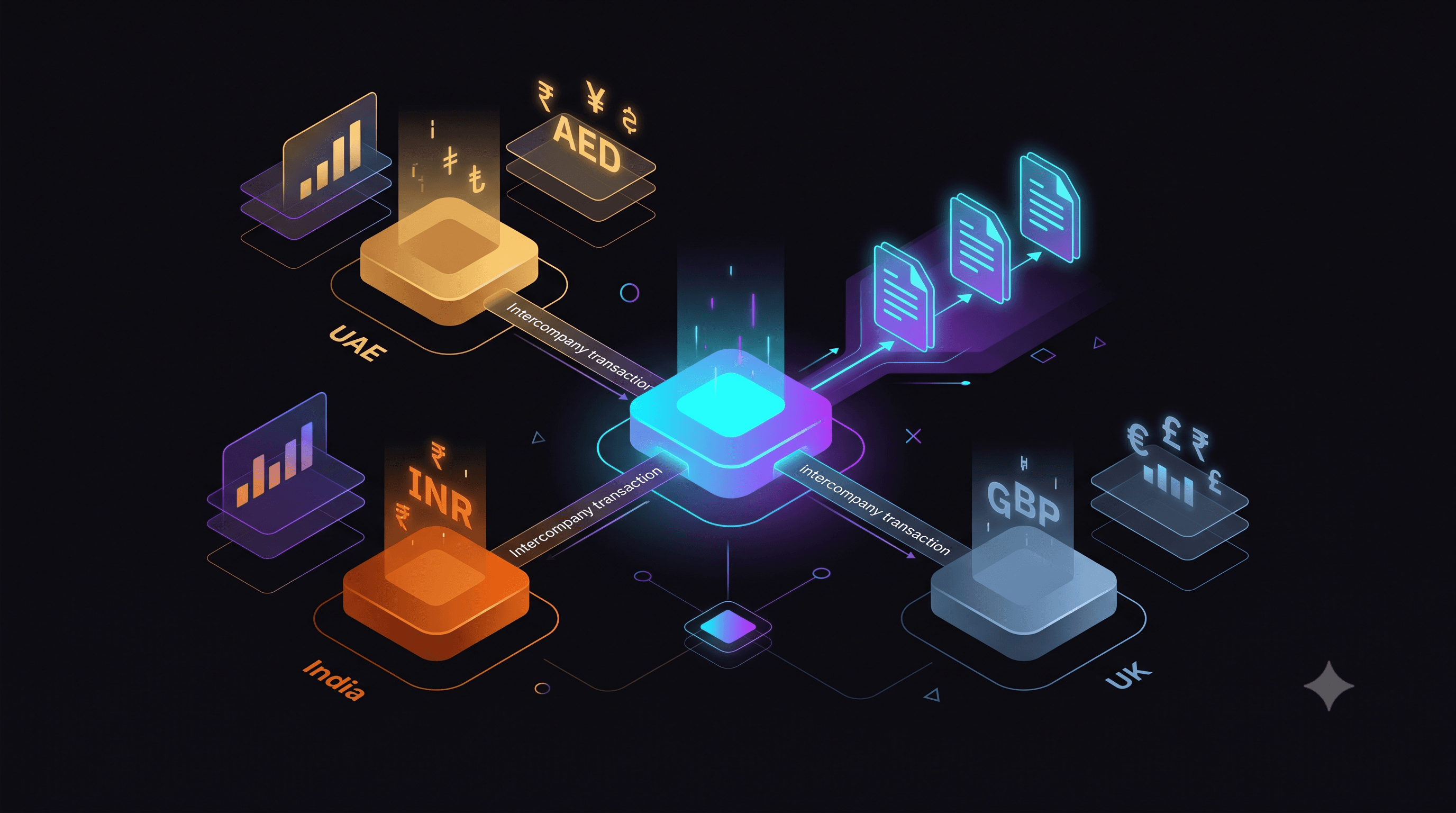
A holding group with entities in UAE, India, and the UK faces a complex ERPNext configuration challenge: multiple currencies, multiple tax regimes, multiple chart of accounts structures, intercompany transactions, and a need for consolidated group reporting. ERPNext supports all of this, but the setup sequence matters.
Company Hierarchy Setup
ERPNext supports parent-child company relationships. The holding company sits at the top; subsidiaries are linked to it as child companies. This hierarchy drives consolidated financial reporting. Setup: create the holding company first with the group's functional currency (often USD or GBP for international groups). Create each subsidiary with its local currency (AED for UAE, INR for India, GBP for UK). Link each subsidiary to the holding company in the company master.
Chart of Accounts for Multi-Company Groups
Each company in ERPNext has its own chart of accounts. For a holding group, you have two options: Option A: Standardised COA across all entities. Create a group-level COA template and apply it to all subsidiaries. Local compliance accounts (GST liability, VAT payable, UAE VAT receivable) are added to each entity's COA individually. Option B: Local COAs with group mapping. Each entity has its local COA, and a mapping table translates local account codes to group consolidation account codes for reporting. Techseria recommendation: Option A for groups that want tight reporting consistency; Option B for groups that were already running with different legacy COAs and the migration cost of harmonisation is prohibitive.
Intercompany Transactions
Intercompany transactions — management fees, shared services charges, intercompany loans, inventory transfers between group entities — are a common source of complexity. ERPNext handles intercompany transactions through the Intercompany Journal Entry feature. When Company A charges Company B for management services: Company A raises an intercompany Sales Invoice to Company B. ERPNext automatically creates the corresponding Purchase Invoice in Company B. The intercompany receivable/payable accounts are automatically populated.
Currency handling: intercompany transactions are recorded in the transaction currency (e.g., USD for a USD-denominated management fee). Each entity converts to its functional currency at the exchange rate on the transaction date. Exchange differences are posted to the foreign exchange gain/loss account.
Consolidated Reporting
ERPNext's consolidated financial reports (Balance Sheet, P&L) aggregate data across all companies in the hierarchy, converting each entity's figures to the group currency at the configured exchange rates. Intercompany eliminations (e.g., eliminating the management fee revenue in Company A against the management fee expense in Company B) must be done as consolidation journal entries — ERPNext does not auto-eliminate intercompany transactions.
Compliance Configuration by Entity
UAE entity: UAE VAT at 5%, MOHRE WPS compliance for payroll, IBAN-based payment processing. Configure: UAE VAT tax templates, Salary Information File (SIF) generation for WPS, company address with TRN (Tax Registration Number).
India entity: GST (CGST/SGST/IGST), TDS/TCS, e-invoicing (if above threshold), e-way bills. Configure: India Compliance app, GSTIN per company address, HSN codes on all items, TDS categories per supplier.
UK entity: VAT (Making Tax Digital), PAYE payroll (via Frappe HRMS or external payroll), Companies House filing data. Configure: UK VAT tax templates with MTD integration, VAT return periods, PAYE settings in Frappe HRMS.
Implementation Sequence for Multi-Company Groups
Techseria recommends this implementation sequence for multi-company groups: 1. Configure holding company and COA structure. 2. Configure subsidiary companies and link to holding. 3. Set up intercompany accounts and transaction rules. 4. Configure each entity's local compliance (tax, payroll). 5. Migrate opening balances entity by entity, starting with the smallest. 6. Test intercompany transactions with a full cycle (invoice raised → received → paid → reconciled). 7. Test consolidated reporting for accuracy.
Techseria has implemented ERPNext multi-company setups for holding groups across UAE, India, UK, and Saudi Arabia. Book a Strategy Session to discuss your group structure.
Ready to accelerate your operations?
See how custom AI solutions, ERPNext integration, and workflow automations can lower your operating costs. Book your free 30-minute Workflow Audit with a senior engineer.