

Catch Quality Drift Before the Customer Does: SPC, FPY Drift and Supplier Quality in Practice
A customer rejects a batch. Looking back, first-pass yield had been sliding for two weeks, mostly on the night shift, mostly on one product. The data was in the inspection sheets. Nobody put it together.
At the same time, one supplier's lots keep getting rejected. Sampling is still "normal". Rejected material is sent back, but the debit notes are never raised, and the money is quietly lost.
In short: Quality problems reach customers when inspection data is recorded but not analysed continuously. Run SPC rules on every characteristic, watch first-pass-yield drift, and cluster defects by shift, crew, lot and product. On the supply side, rank suppliers by rejection PPM, tighten sampling for those getting worse, and reconcile rejections against debit notes actually raised.
Why drift goes unnoticed
- Inspection sheets are filed, not analysed. The data exists but nobody plots it every day.
- Averages hide patterns. Overall FPY looks acceptable while one shift or one product is failing.
- Small samples cause false alarms, which teach people to ignore alerts.
- Supplier sampling never changes. A supplier who is getting worse is inspected at the same level as one who has been perfect for a year.
- Debit notes fall through the gap between quality, stores and accounts.
How to catch quality problems early
1. Apply SPC rules, not just limits
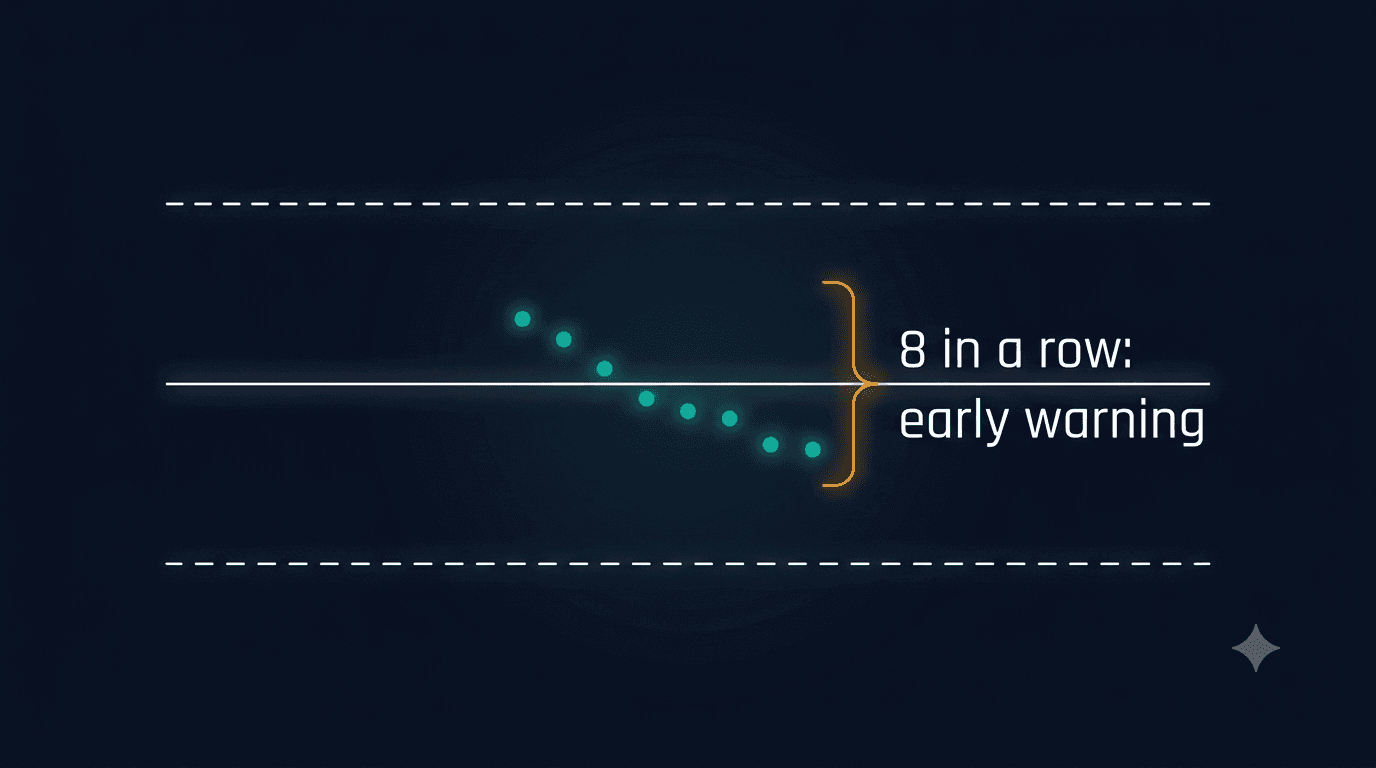
Control limits alone catch only big shifts. Add early-warning rules such as a 2σ warning, 8 points in a row on one side of the centre line, and CUSUM for slow drift.
2. Track first-pass yield as a trend
Watch FPY by line, product and shift over time, not as a monthly average.
3. Cluster defects
Look for defect concentrations by shift, crew, lot, model or defect code. Flag small samples as unreliable instead of raising a false alarm.
4. Put a rupee value on scrap and rework
Declare the rework rate and scrap cost per unit. A drift with a rupee figure gets attention.
5. Manage suppliers by PPM
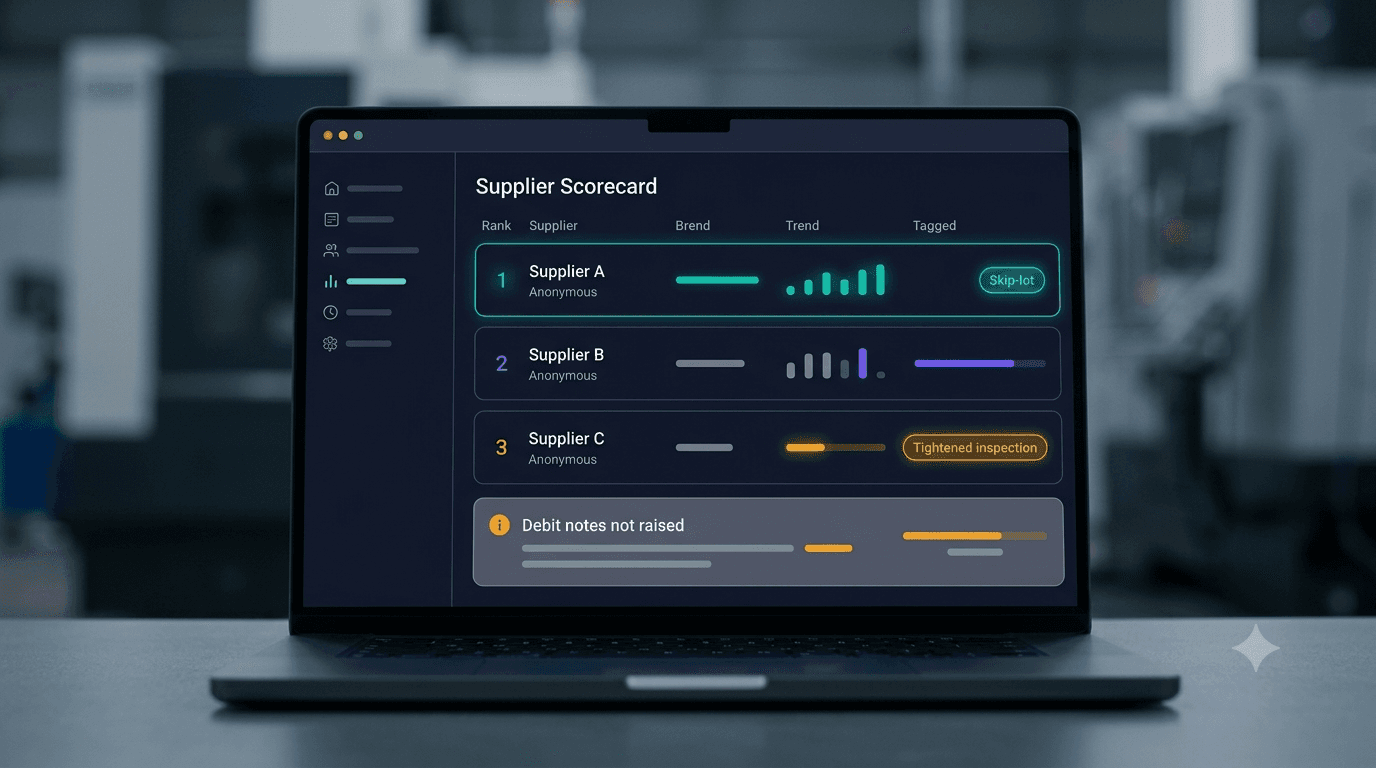
Rank suppliers by rejection PPM. Switch to tightened inspection for suppliers who are getting worse, and skip-lot for consistently good ones.
6. Reconcile rejections against debit notes
Compare recoverable amounts on rejected lots against debit notes actually raised, and track CAPA/8D ageing.
How MIRA catches it in week one
MIRA, Techseria's AI plant-intelligence platform, runs quality analytics continuously on your inspection records.
- SPC: 3σ control limits, points beyond 3σ, a 2σ early warning, 8 in a row on one side of the centre line, CUSUM drift, and p-chart and u-chart limits.
- FPY drift and defect clusters by shift, crew, lot, model or defect code, using chi-square and lift. Small samples are flagged as untrustworthy.
- Scrap and rework cost, priced when you declare a rework rate or scrap unit cost.
- Incoming Quality: a supplier scorecard by rejection PPM, trend, sampling-plan switching (skip-lot or tightened), debit notes not yet raised against recoverable amounts, and CAPA/8D ageing. A supplier with no inspections shows "not measured", not zero.
The drift is caught in week one, on the right shift and product, before it reaches the customer. Bad suppliers are inspected harder, good ones faster, and the money for rejected material is recovered.
What you need
Quality inspection records, supplier receipts, incoming inspections and purchase invoices, from CSV, API, SAP or FacilityFlow.
Frequently asked questions
Which SPC rules should we use?
Start with points beyond 3σ, a 2σ warning, runs of 8 points on one side of the centre line, and CUSUM for slow drift. MIRA covers these today; the full Western Electric and Nelson rule set is not yet included.
How do we reduce supplier rejections?
Measure rejection PPM per supplier, share the scorecard, tighten sampling when a supplier gets worse, and make sure every recoverable rejection produces a debit note and a CAPA.
What is first-pass yield?
FPY is the share of units that pass inspection the first time, without rework. It is one of the most sensitive early indicators of a process problem.
When did a customer last find a problem before you did?
See MIRA on Your Own Plant Data
Bring a month of work orders, a meter export or a PLC tag list. We'll show you what MIRA finds, and what it needs to find more. Unlimited users and assets, installed inside your network.
Ready to accelerate your operations?
See how custom AI solutions, ERPNext integration, and workflow automations can lower your operating costs. Book your free 30-minute Workflow Audit with a senior engineer.