
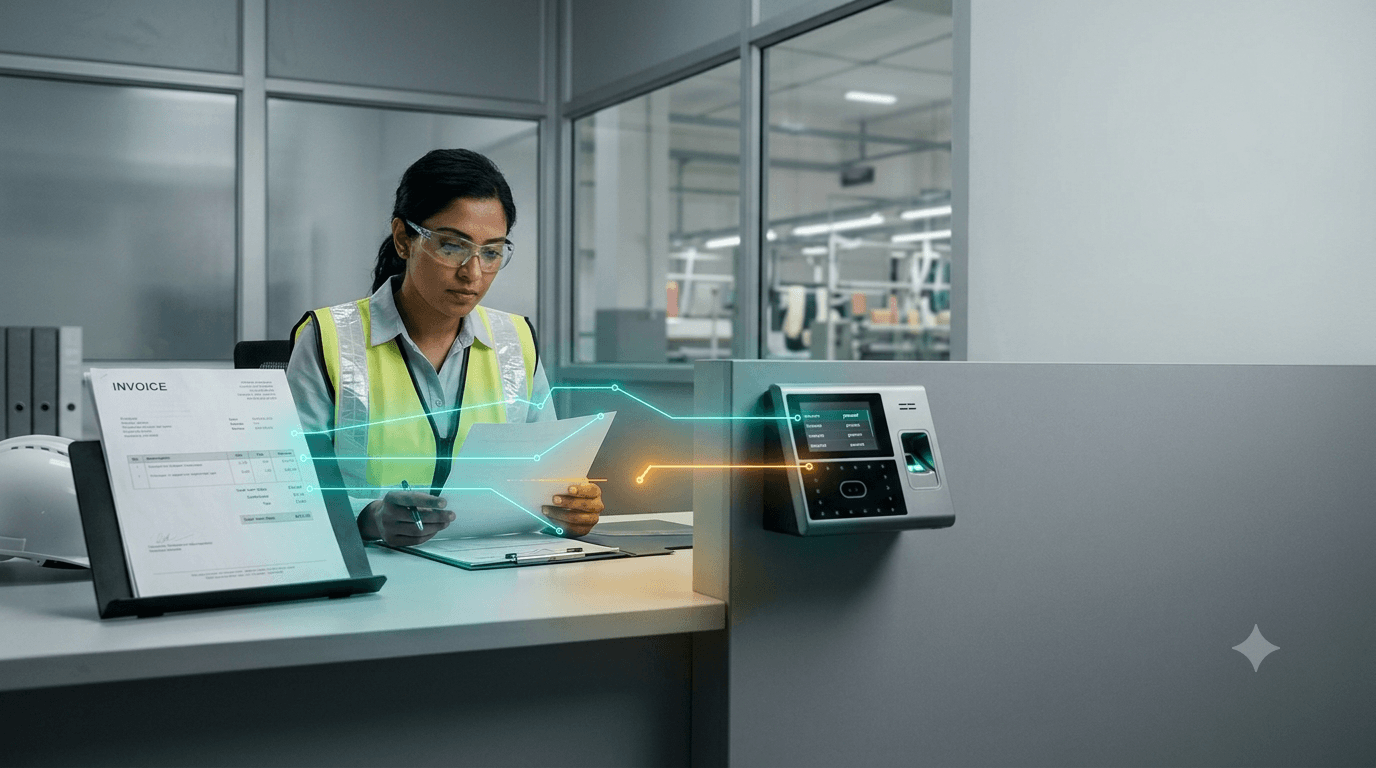
"We Pay for Things We Never Got": Finding Hidden Leakages in Contract Labour, AMC and Soft Services
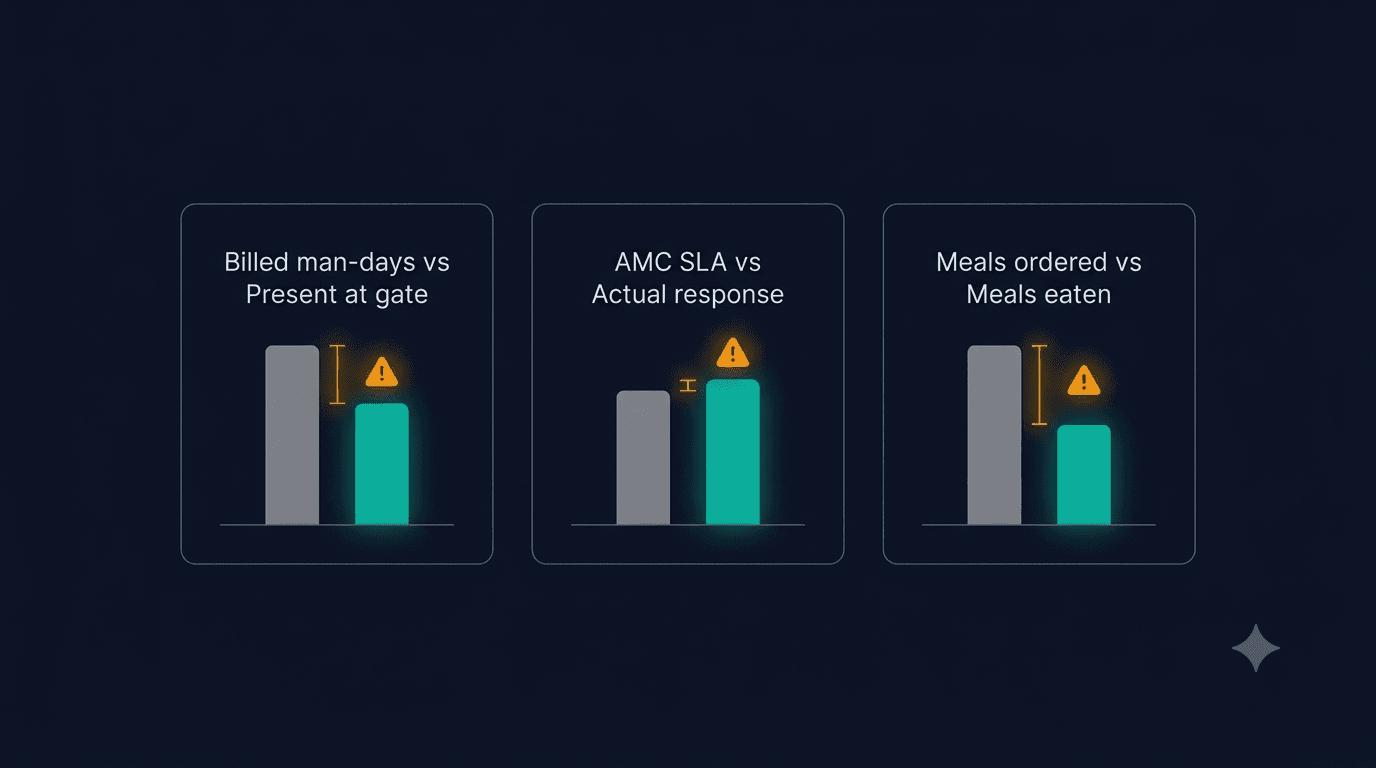
Every month, the contract-labour bill is approved, because checking it against the gate register would take a week. Everybody suspects it is padded. Nobody can prove it.
The chiller AMC promises a four-hour response. Last month the vendor took two days, twice. The invoice came in full and was paid. The contract is up for renewal next month, and nobody has the performance history.
In the canteen, meals are cooked for 600 and eaten by 480. The buses run half-empty.
(Figures in this article are illustrative examples, not customer results.)
In short: Plants lose money wherever a bill is paid without being checked against a record. Reconcile contractor invoices against attendance, calculate AMC penalties from recorded SLA breaches before paying, and order meals and transport from actual participation. The data usually exists already, in the attendance system, the work-order history and the canteen register.
Why these leakages survive
- Checking takes too long. Reconciling hundreds of invoice lines against attendance by hand is not realistic every month.
- The records are in different places. Attendance sits with HR, SLA breaches with maintenance, contracts with procurement and invoices with accounts.
- Penalties are rarely claimed because nobody has the breach history when the invoice arrives.
- Renewals are negotiated on memory, not evidence.
- Soft services are "small money", so nobody looks, even though they add up every day.
How to stop paying for what was not delivered
1. Reconcile contractor bills against attendance
Compare man-days billed with man-days actually present at the gate for every contractor, every month.
2. Screen invoices for unusual patterns
A first-digit (Benford) test on billed amounts can flag invoices that look invented. It needs enough values (at least 50) to be meaningful.
3. Record SLA breaches as they happen
Every AMC work order should record response and resolution time against the contract SLA.
4. Summarise penalties before paying
Calculate the penalty due from recorded breaches and deduct it before the invoice is approved.
5. Score vendors before renewal
Compare vendors on coverage, breaches, penalties and performance, and decide renew or replace with evidence.
6. Order meals and transport from actual participation
Use at least a couple of weeks of history to recommend meal quantities and to check bus route occupancy.
How MIRA acts as the auditor who works for you
MIRA, Techseria's AI plant-intelligence platform, checks these bills against your own records every month.
- Contractor Billing Review: contractor invoices reconciled against attendance, plus a Benford first-digit test when at least 50 values exist.
- People Leakage agent: shift readiness, turnout, contract-labour billing and attendance-confirmed man-days.
- Vendor & AMC Contracts: coverage, expiring contracts, renewal alerts, comparison, SLA penalty summary and vendor performance scores. The AMC Advisor agent gives a renew-or-replace view with evidence.
- Canteen & Soft Services: meal participation learned from history (at least 10 days), recommended order quantity, meal waste and bus route occupancy. A blank "consumed" count is treated as unknown, never as zero.
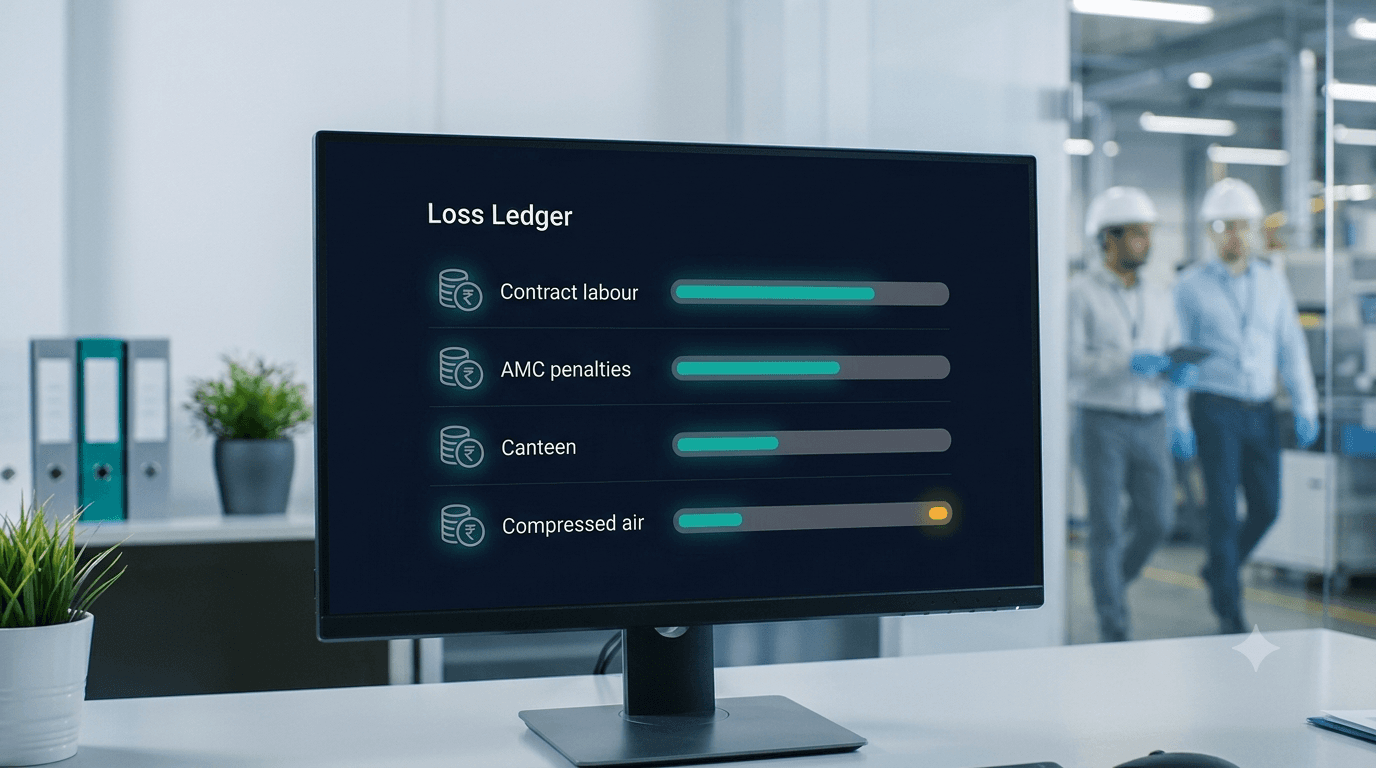
- Loss Ledger: every leakage, from contract labour to air leaks, in one ledger of money lost, with recurring and one-off amounts kept apart.
Bills are paid for work that happened. Penalties are claimed. Renewals are negotiated with facts. And contractors know the bill is checked.
What you need
Contractor invoices and employee check-ins (from your attendance system, by CSV or API), contracts, SLA targets and breaches, work orders, and canteen and transport records.
Frequently asked questions
How do I verify a contract labour bill?
Match each contractor's billed man-days against gate or biometric attendance for the same period, by person and by day. Differences are the amount to query.
How do I enforce AMC SLA penalties?
Record response and resolution times on every AMC work order, calculate the penalty per the contract terms, and deduct it before approving the invoice.
Is a Benford test proof of fraud?
No. It is a screening test that flags invoices worth a closer look. MIRA presents results as variances to investigate, never as accusations.
Which bills does your plant pay without checking?
See MIRA on Your Own Plant Data
Bring a month of work orders, a meter export or a PLC tag list. We'll show you what MIRA finds, and what it needs to find more. Unlimited users and assets, installed inside your network.
Ready to accelerate your operations?
See how custom AI solutions, ERPNext integration, and workflow automations can lower your operating costs. Book your free 30-minute Workflow Audit with a senior engineer.