

"Our PM Compliance Is 95% and We Still Have Breakdowns": Why It Happens and How to Fix Your PM Plan
The PM report is green every month. The breakdown count is not going down. Then an auditor asks a simple question: "Which failure does this PM task protect against?" Nobody can answer.
This is one of the most common contradictions in maintenance, and it is not a sign of a lazy team. It is a sign that the PM plan measures activity, not protection.
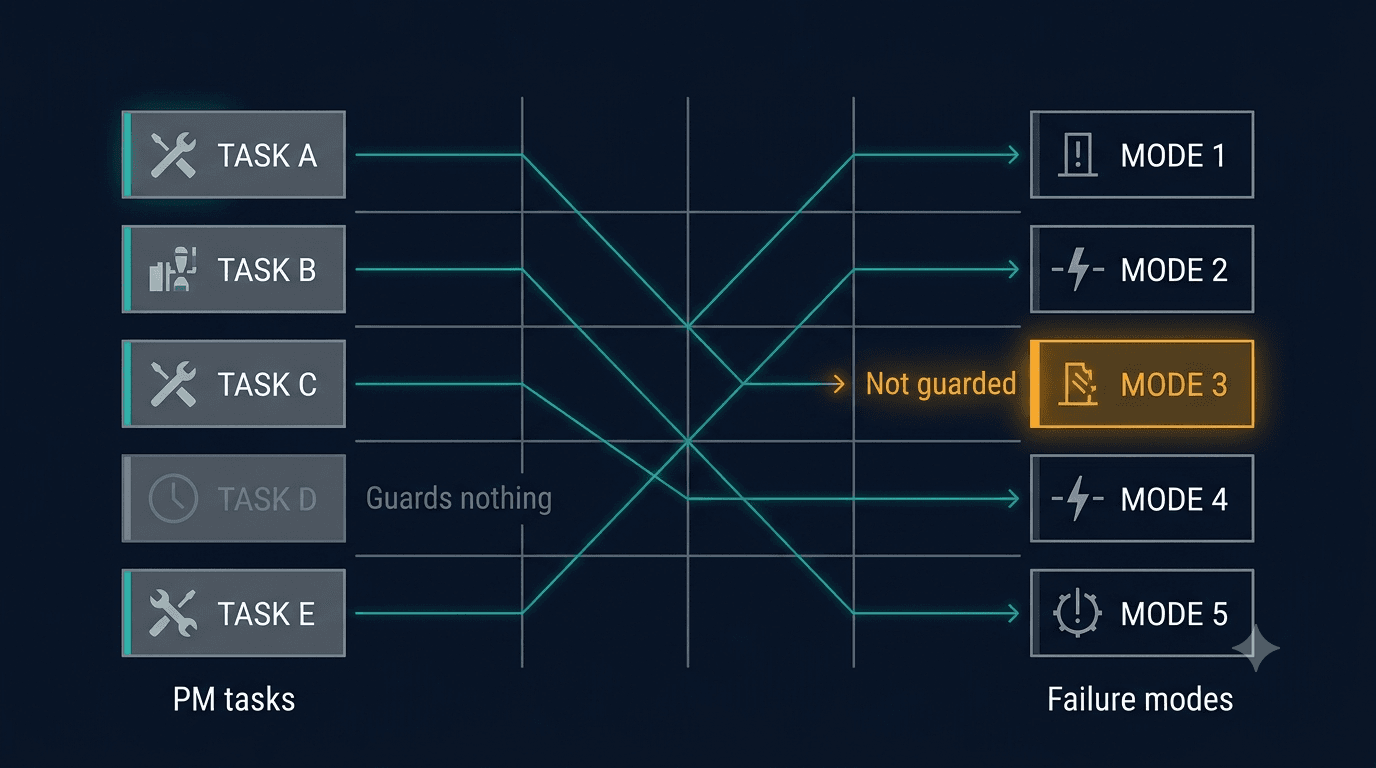
In short: High PM compliance does not reduce breakdowns when PM tasks are not linked to failure modes. Fix it in four steps. Measure PM adherence from actual completion dates. Link every PM task to a failure mode through an FMEA. Find failure modes that no task guards and tasks that guard nothing. Then move hours from useless tasks to the ones that matter.
Why PM compliance and breakdowns disagree
- PM plans are copied, not designed. Most plans come from the OEM manual or the previous engineer. They were never checked against how your assets actually fail in your operating conditions.
- Compliance counts tasks, not failures prevented. A task "done" on paper may guard against nothing, while a real failure mode has no task at all.
- Late PM is counted as done. Many reports count a task done three weeks late as compliant, which hides the real risk.
- Some tasks duplicate each other. Two departments inspect the same thing, while a third failure mode is missed.
How to build a PM plan that actually prevents failures
1. Measure PM adherence honestly
Count only PM completed on or before its due day, from the actual visit history, not the planned calendar. Calculate the next due date from the last actual completion.
2. Link each PM task to a failure mode
An FMEA (Failure Mode and Effects Analysis) lists how each asset fails, what the effect is, and how likely and detectable it is. Every PM task should guard at least one failure mode on that list.
3. Find the gaps and the waste
Look for failure modes with no PM task (gaps), PM tasks that guard nothing (waste), and tasks that duplicate each other.
4. Check the intervals
Intervals copied from a manual are often too short for some assets and too long for others. Use your own failure history to judge them.
5. Track the KPIs that show real results
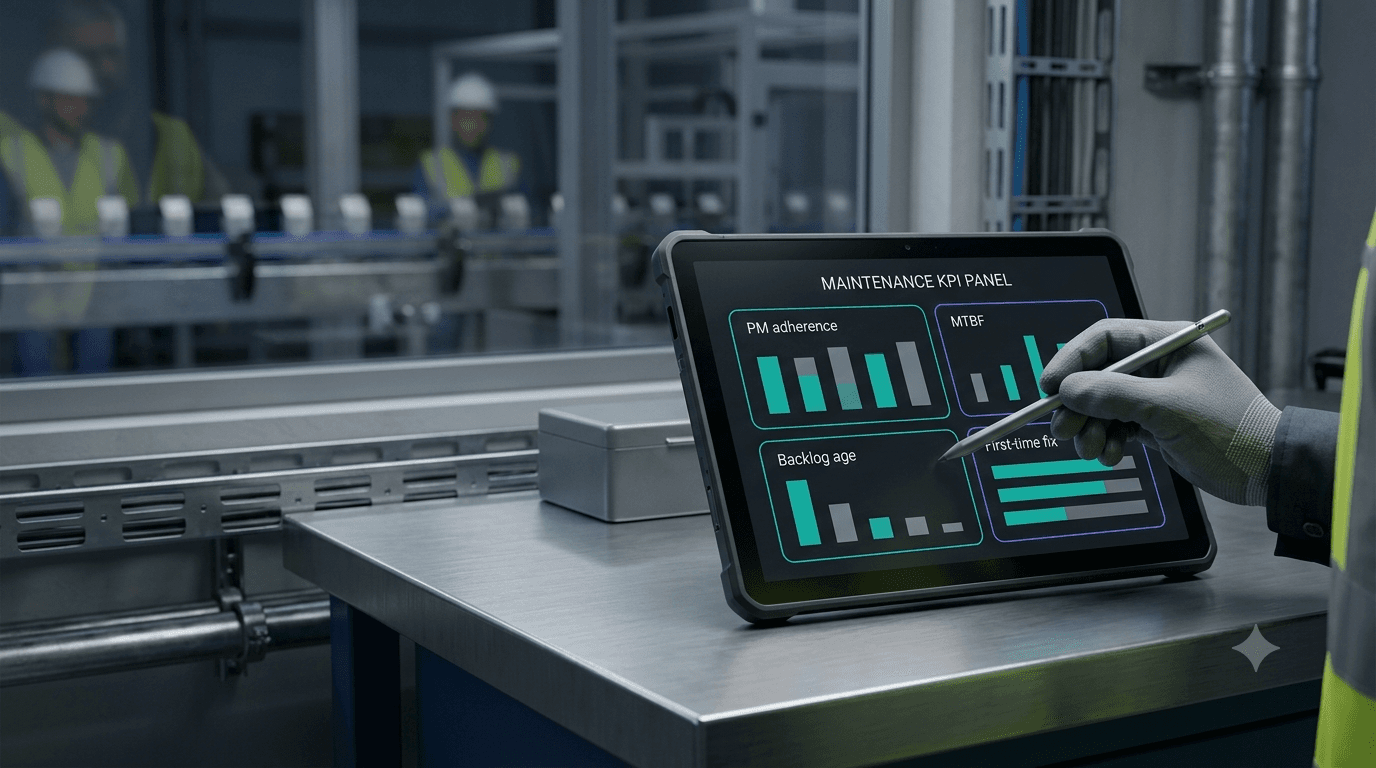
Backlog age, overdue share, corrective share, first-time-fix rate and MTBF tell you whether the plan is working. PM compliance alone does not.
How MIRA turns PM into a plan against failures
MIRA, Techseria's AI plant-intelligence platform, connects your PM plan to how your assets actually fail.
- PM Adherence measures the share of PM completed on or before its due day from real visit history, and calculates the next due date from actual completion.
- FMEA Studies follow an eight-stage guided workflow. Occurrence comes from your own work-order history, RPN is calculated, and each row is tagged as observed, library-based or AI-drafted. Your engineer approves and freezes each revision.
- Strategy Optimiser and PM Coverage show, for approved FMEA studies, the failure modes that no PM guards, redundant PM, and interval verdicts.
- Maintenance KPIs include backlog count and age, overdue share, PM schedule adherence, corrective share, first-time-fix rate, MTBF and availability. Each KPI says so when its data is missing.
- PM work orders are generated automatically every day, so the plan becomes action without manual effort.
The result is PM that works as a plan against failures, not a checklist. Hours move from tasks that guard nothing to the ones that matter.
What you need
PM schedules, maintenance visit history and work orders, from Excel, SAP or FacilityFlow. An approved FMEA study unlocks coverage and strategy analysis. MTBF and availability need downtime minutes on work orders.
Frequently asked questions
What is the difference between PM compliance and PM adherence?
PM compliance often counts any completed task. PM adherence counts only tasks completed on or before their due date, which is a much more honest measure of risk.
Do we need an FMEA to improve PM?
To know which failure each task prevents, yes. MIRA helps your team build the FMEA from your own work-order history, so it does not take months of workshops.
Which maintenance KPIs matter most?
Start with PM adherence, corrective share, backlog age, first-time-fix rate and MTBF. Together they show whether maintenance is getting ahead of failures.
Pick one PM task at random
Can your team tell you which failure it prevents? If not, see how MIRA links PM to failure modes or book a demo.
See MIRA on Your Own Plant Data
Bring a month of work orders, a meter export or a PLC tag list. We'll show you what MIRA finds, and what it needs to find more. Unlimited users and assets, installed inside your network.
Ready to accelerate your operations?
See how custom AI solutions, ERPNext integration, and workflow automations can lower your operating costs. Book your free 30-minute Workflow Audit with a senior engineer.