

Stores Are Full but the Critical Spare Is Missing: A Practical Guide to VED-FSN Spare Parts Analysis
The stores hold crores of rupees of stock. Half of it has not moved in two years. Yet the gearbox bearing for the main line is not there, and the emergency order costs three times the normal price.
This is the classic MRO inventory paradox: too much of what you do not need, and too little of what stops the plant.
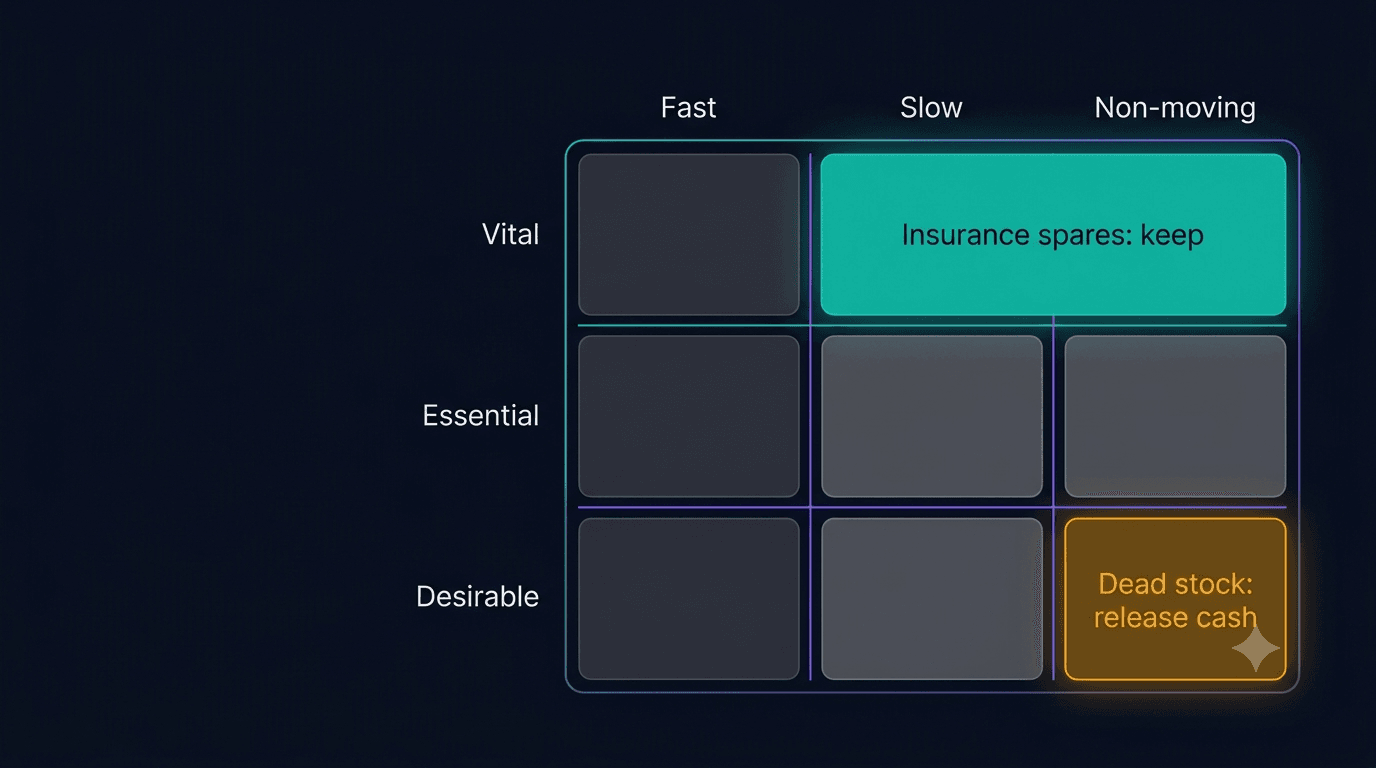
In short: Classify every spare by criticality (Vital, Essential, Desirable) from the equipment it serves, and by movement (Fast, Slow, Non-moving) from issue history. The VED×FSN cross separates insurance spares, which are vital and slow-moving and should be kept, from dead stock, which is desirable and non-moving and whose cash can be released. Clean duplicate part codes, and forecast consumables from actual issues to set reorder points.
Why stores end up full and empty at the same time
- Stock is managed by habit, not by how critical a part is or how fast it moves.
- Criticality is not linked to equipment. A bearing that serves a line with no standby is treated like any other bearing.
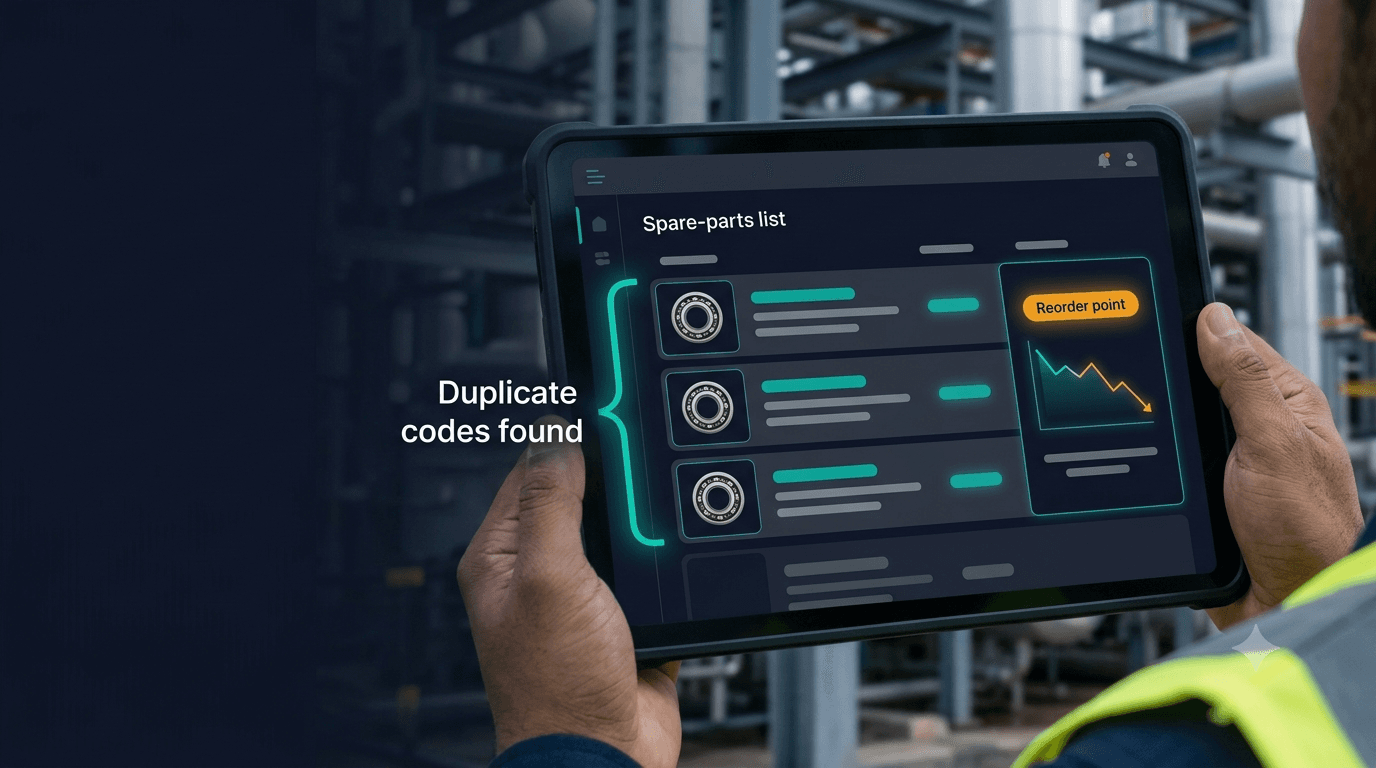
- Duplicate part codes. The same bearing exists under three numbers, so stores shows zero while two more sit on another shelf.
- Lumpy demand breaks simple min-max rules. Parts used a few times a year need different forecasting methods.
- Nobody checks the spare before planning the job, so planned work becomes an emergency.
How to fix MRO inventory in five steps
1. Derive criticality from the equipment
A spare is Vital if it serves critical equipment, Essential if it serves important equipment, and Desirable otherwise.
2. Classify movement from issue history
Fast, Slow or Non-moving, based on actual store issues over the past one to two years.
3. Build the VED×FSN matrix
- Vital + Slow/Non-moving: insurance spares. Keep them, and review quantity.
- Desirable + Non-moving: dead stock. Release the cash.
- Vital + Fast: protect with a safety stock and a reorder point.
4. Clean duplicate part codes
Merge codes that refer to the same item. This often reveals stock you did not know you had.
5. Forecast consumables properly
Classify demand first. Use exponentially weighted averages for steady items and Croston/SBA for intermittent items, then set a reorder point.
How MIRA manages spares by risk
MIRA, Techseria's AI plant-intelligence platform, does the spare-parts analysis continuously.
- VED criticality taken from the equipment each part serves, and FSN movement class from issue history.
- VED×FSN cross that separates insurance spares from dead stock.
- Weibull life per part, a stocking policy, and excess and obsolete stock identification.
- Duplicate part codes detected automatically.
- Consumables forecast: demand classification, then EWMA or Croston/SBA forecasting and a reorder point, from 365 days of store issues.
- Risk-aligned reorder points and safety stock, calculated from failure risk and lead time.
- Prescription-to-part availability: every maintenance prescription states whether the spare is in stock before the job is planned.
- Recommend-only procurement: the Procurement agent shows the exact material request or PO it would create and waits for your confirmation.
Cash is released from dead stock, and the parts that stop a line are always there.
What you need
Materials, stock levels and store issue history, plus the equipment each part serves. Excel or SAP exports are enough.
Frequently asked questions
What is VED analysis?
VED classifies spares as Vital, Essential or Desirable based on the impact of not having them. It is usually combined with FSN (Fast, Slow, Non-moving) to decide stocking policy.
What is the difference between insurance spares and dead stock?
Insurance spares are critical parts that rarely move but must be held because a failure without them is very costly. Dead stock is non-critical material that has not moved and can be disposed of.
How do I set a reorder point for a spare used only a few times a year?
Use a method designed for intermittent demand, such as Croston or SBA, together with lead time and criticality.
What share of your stores value has not moved in a year?
See how MIRA manages spares or book a demo with your stores export.
See MIRA on Your Own Plant Data
Bring a month of work orders, a meter export or a PLC tag list. We'll show you what MIRA finds, and what it needs to find more. Unlimited users and assets, installed inside your network.
Ready to accelerate your operations?
See how custom AI solutions, ERPNext integration, and workflow automations can lower your operating costs. Book your free 30-minute Workflow Audit with a senior engineer.